
I am a traveler passionate about history and archaeology, and I had always heard about the Lord of Sipán and his tomb as one of the most impressive discoveries in America. So when I had the chance to visit the Tombs of Sipán in Lambayeque, Peru, I didn’t hesitate for a second. What I found exceeded all my expectations: a journey into the past of the Mochica culture, a civilization that left an impressive legacy on the northern coast of Peru.
The Tombs of Sipán are located in the district of Zaña, in the Lambayeque region, about 30 km from Chiclayo. They are part of a complex of adobe pyramids and huacas where the tombs of Mochica rulers have been discovered, containing impressive treasures made of gold, silver, and copper.
This discovery changed the course of archaeology in Peru and the world. Before Sipán, very few pre-Hispanic tombs had been found intact, as looters often stole the treasures before archaeologists could study them.
In 1987, archaeologist Walter Alva and his team made one of the most significant archaeological discoveries in Peruvian history: the tomb of the Lord of Sipán, a Mochica ruler who lived around the 3rd century AD. The discovery included over 600 objects of gold and silver, ceremonial attire, and the remains of other elite Mochica figures.
Archaeologists found that the Lord of Sipán was not the only one buried there. They uncovered tombs of priests, warriors, and other rulers. Each tomb contained funerary objects of immense value, reflecting the hierarchy and power of this ancient civilization.
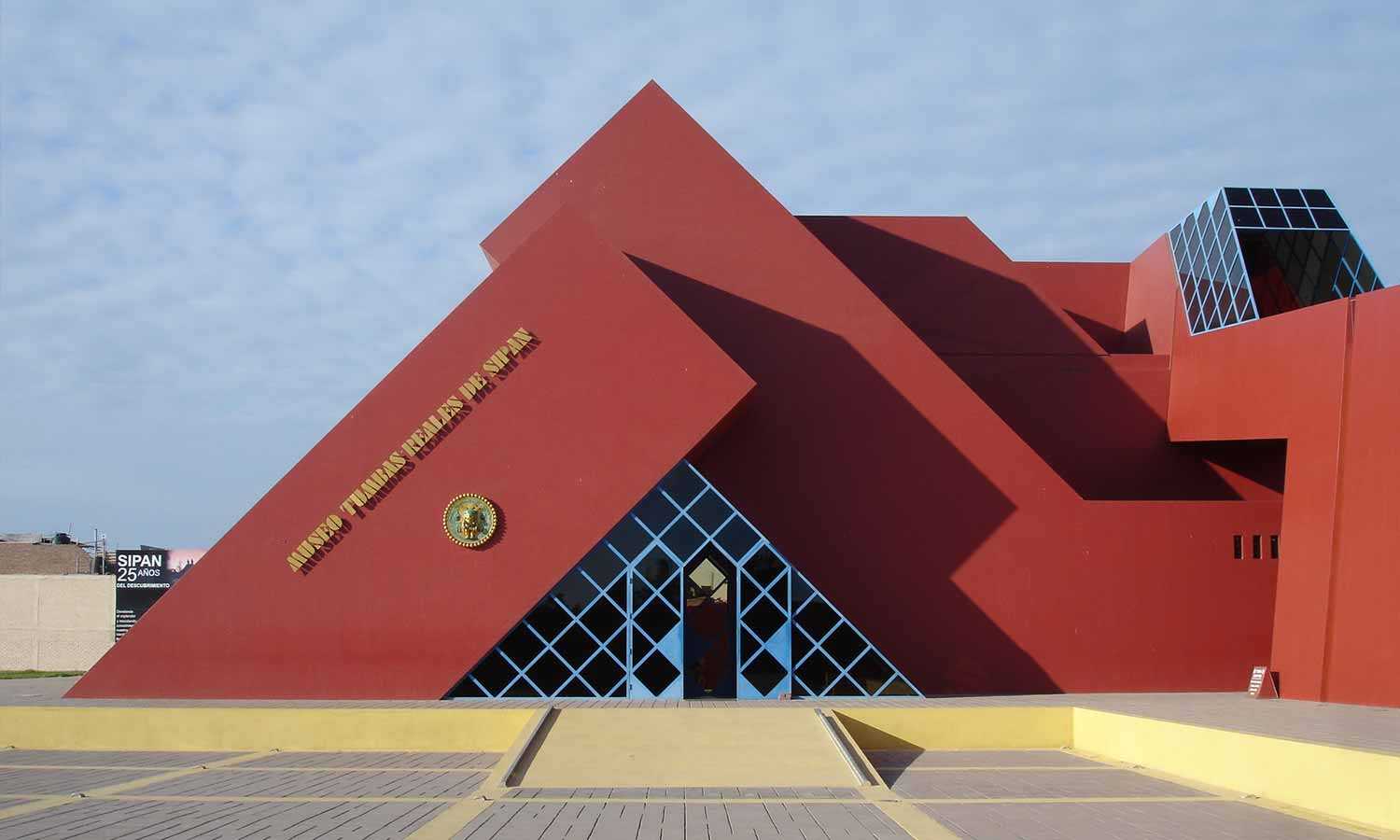
To protect and display these treasures, the Royal Tombs of Sipán Museum was inaugurated in 2002 in the city of Lambayeque, about 10 km from Chiclayo.
The museum’s architecture is inspired by ancient Mochica pyramids and consists of three levels:
The museum is breathtaking. From the moment you step inside, the atmosphere transports you to the era of the Mochica. Seeing the gold pieces, the intricate jewelry, and the ceremonial attire up close is a mesmerizing experience.
If you plan to visit, the hours of operation are Tuesday to Sunday, from 9:00 a.m. to 5:00 p.m.. Admission costs around 10 soles for adults and 4 soles for students.
If you’re in Chiclayo, there are several ways to reach the museum:
If you’re traveling from Lima, you can take a flight to Chiclayo (about 1 hour and 30 minutes) or a bus (10 to 12 hours).
After visiting the museum, I decided to venture to the Sipán archaeological site, where everything began. Here, you can see the adobe structures that were once magnificent temples and palaces of the Mochica civilization.
The site is still under excavation, and it was fascinating to watch archaeologists uncover new tombs that could reveal even more secrets of this culture.
Our guide explained that the Lord of Sipán was buried with eight people, including a priest, a military chief, concubines, and a guardian with amputated feet (to prevent him from leaving the tomb). This reflects the complexity of Mochica beliefs about death and the afterlife.
Absolutely. If you are a traveler passionate about history and culture, this is a must-visit destination in Peru. Here, you don’t just see gold artifacts and ancient tombs—you truly feel the grandeur of a civilization that existed long before the Incas.
Additionally, Chiclayo and Lambayeque offer other attractions such as:
For a complete experience, I recommend checking out more details on the official museum website.
 Consult an expert
 Chat
Chat