
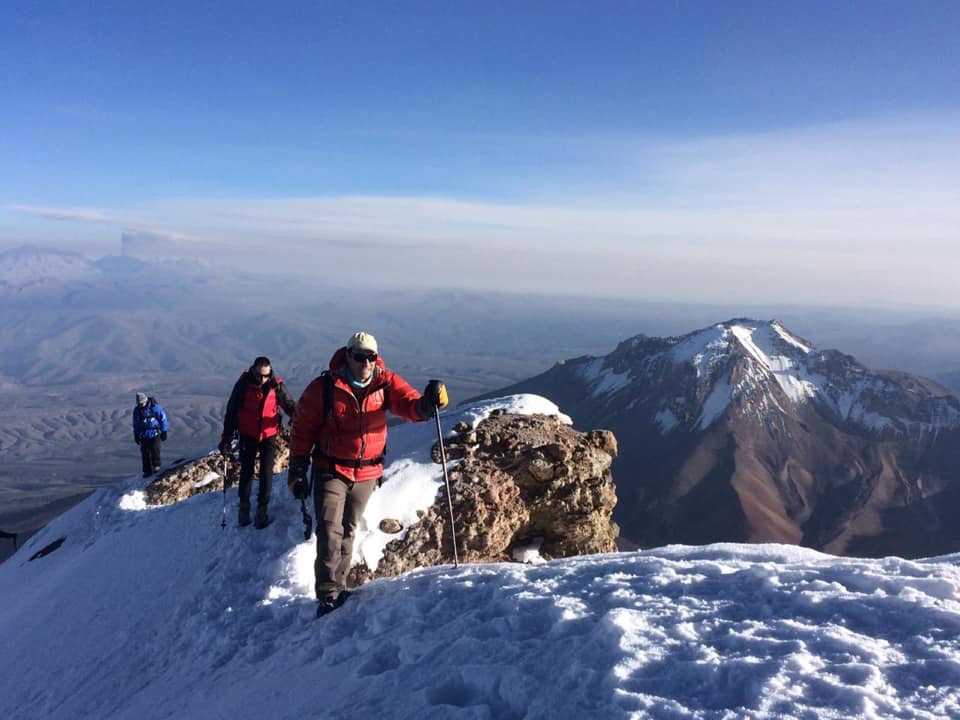
Chachani, located in the Arequipa region of southern Peru, is one of the most accessible high-altitude volcanoes in the world for climbers seeking to summit a six-thousander without prior technical experience. Standing at 6,075 meters above sea level, it offers the perfect combination of physical challenge, scenic beauty, and safety.
Unlike other high-altitude peaks, Chachani requires no technical climbing skills or equipment such as ropes or ice axes, making it an ideal option for those looking to enter the world of high-altitude mountaineering. From its summit, climbers are rewarded with stunning panoramic views of Arequipa’s valley and nearby volcanoes such as Misti, Pichu Pichu, and Ampato.
This guide provides everything you need to plan your ascent, including the best time to climb, a detailed itinerary, recommended gear list, acclimatization advice, and more.
Ready to take on the challenge? Get all the details and book your 2-Day Chachani Climbing Tour with a certified guide, 4x4 transport, meals, basic equipment, and everything you need to reach the summit safely.
Chachani (6,075 m / 19,931 ft) is widely regarded as one of the friendliest six-thousand-meter peaks in the Andes. Unlike other mountains of similar height, it doesn’t require prior mountaineering experience or technical gear like ropes, harnesses, or ice axes. This makes it an ideal objective for trekkers looking to achieve their first high-altitude summit without facing glaciers or vertical walls.
From the summit of Chachani, you’ll enjoy some of the most spectacular views in southern Peru. To one side rises the majestic Misti Volcano with its perfect cone; to the other, the rugged ridges of Pichu Pichu unfold. In the distance, you can see snowcapped peaks like Coropuna (the highest in southern Peru) and Ampato (home of the famous Juanita mummy). On clear days, you may even glimpse the Altiplano, the Atacama Desert, and — with luck — flashes of Lake Titicaca on the horizon.
One of Chachani’s main advantages is its location in a high-altitude desert climate. From April to November, conditions are typically stable, with clear skies, low humidity, and moderate winds. These predictable patterns make it easier to plan successful expeditions and reduce weather-related risks, a key factor for a safe climb.
Although the climb doesn’t involve technical sections, it should not be underestimated. The summit push can take 6 to 8 hours from base camp, and the main challenge lies in the altitude. The terrain is a mix of volcanic sand and loose rocks, requiring good physical condition, endurance, and proper acclimatization. There are no permanent snowfields or glaciers, so crampons are generally unnecessary — but the effects of hypoxia (low oxygen) can be intense without prior preparation.
For climbers planning higher or more technical ascents — such as Huascarán, Coropuna, or peaks in Bolivia and Ecuador — Chachani offers an excellent acclimatization experience. It provides a genuine sense of being above 6,000 meters, without the risks associated with more complex routes.
Another major benefit is its proximity to Arequipa. Chachani is only a few hours away by road, making it easily accessible. From the city, 4x4 vehicles can take you close to base camp, minimizing travel time and simplifying logistics. In other words, you can have breakfast in Arequipa and be standing on a six-thousander the next morning.
In the morning, we depart from Arequipa by 4x4 vehicle towards the slopes of Chachani. The drive takes about 3 to 4 hours, crossing high-altitude desert landscapes with breathtaking views of southern Peru's volcanoes.
At the end of the road, we begin a hike of approximately 1 to 2 hours to reach the base camp, located at 5,200 meters above sea level.
Once settled in, there will be time to rest, acclimatize, and enjoy the silence of the high Andes. At sunset, a hot dinner is served, followed by an early night to prepare mind and body for the summit push.
The summit day begins before dawn, around 1:00 or 2:00 a.m., with a light breakfast before starting the ascent.
The hike to the summit takes about 5 to 7 hours, depending on group pace and physical condition. The route involves no technical sections, but the altitude and the loose, rocky terrain pose a serious physical challenge.
Upon reaching the summit of Chachani at 6,075 meters, you'll be rewarded with a spectacular sunrise and unforgettable panoramic views of the southern Andes.
After taking photos and a short break at the top, we begin the descent back to base camp. Once packed and rehydrated, we return by 4x4 to the city of Arequipa, where the expedition concludes in the afternoon.
The main challenge of this expedition is the altitude. Above 5,000 meters, atmospheric pressure is significantly lower and oxygen is scarce, which can cause altitude sickness if proper acclimatization is not done. Spending at least 2 to 3 days in Arequipa (2,300 m) before the climb is strongly recommended, as well as prior hikes to mid-altitude mountains like Misti or Pichu Pichu.
The ascent takes place before dawn, when temperatures can drop below -5°C (23°F), and wind chill can make it feel like -10°C (14°F) or colder. Proper mountain clothing is essential: thermal layers, gloves, windbreaker, and face protection.
Chachani’s terrain combines loose volcanic sand and large rocks, especially near the summit, which can make progress slow and physically taxing. Often, you’ll take a step forward and slide half a step back. Good balance, strong legs, and reliable trekking boots are essential.
Even with acclimatization, symptoms like headache, dizziness, nausea, extreme fatigue, or loss of appetite can occur. Guides will monitor participants closely, and it’s important to communicate any discomfort immediately. Staying hydrated, resting well, and maintaining a slow, steady pace are key to minimizing risks.
Chachani rises above 6,000 meters, and while it’s a non-technical climb, the extreme altitude poses real risks for those who are not well-acclimatized. The lack of oxygen can cause serious symptoms such as headaches, nausea, intense fatigue, or even force an early descent. Proper preparation is crucial to maximize performance and reduce health risks.
Every body reacts differently to altitude, but following these guidelines significantly increases your chances of safely reaching the summit and fully enjoying the experience.
Choosing the right season is essential to ensure a safe and successful ascent of Chachani. Weather conditions in this high-altitude region vary significantly throughout the year.
This is the best time to climb Chachani, as the weather is generally stable, with clear skies, low humidity, and consistent temperatures.
During these months, the chances of rain or snow are minimal, providing better visibility, a lower risk of electrical storms, and safer routes.
Nights can be very cold, but the lack of precipitation more than compensates, making this the preferred season for both climbers and professional tour operators.
This period is characterized by unpredictable and unstable weather. Heavy rain, snowfall at high altitudes, dense fog, and thunderstorms are common.
These conditions increase the risk of accidents, complicate navigation, and may lead to avalanches in steep areas.
For these reasons, this season is not recommended for climbing Chachani, especially for those without prior experience in high-altitude mountaineering.
These months mark the shift between seasons and may offer favorable weather windows, although some instability is possible.
Climbing is feasible during these times, but it's crucial to monitor the weather forecast closely and go with experienced mountain guides.
While the route is non-technical, it is highly recommended to climb with a certified mountain guide, especially if you have no experience above 5,000 meters.
Most tour agencies in Arequipa offer 2-day / 1-night packages, which typically include:
 Consult an expert
 Chat
Chat