






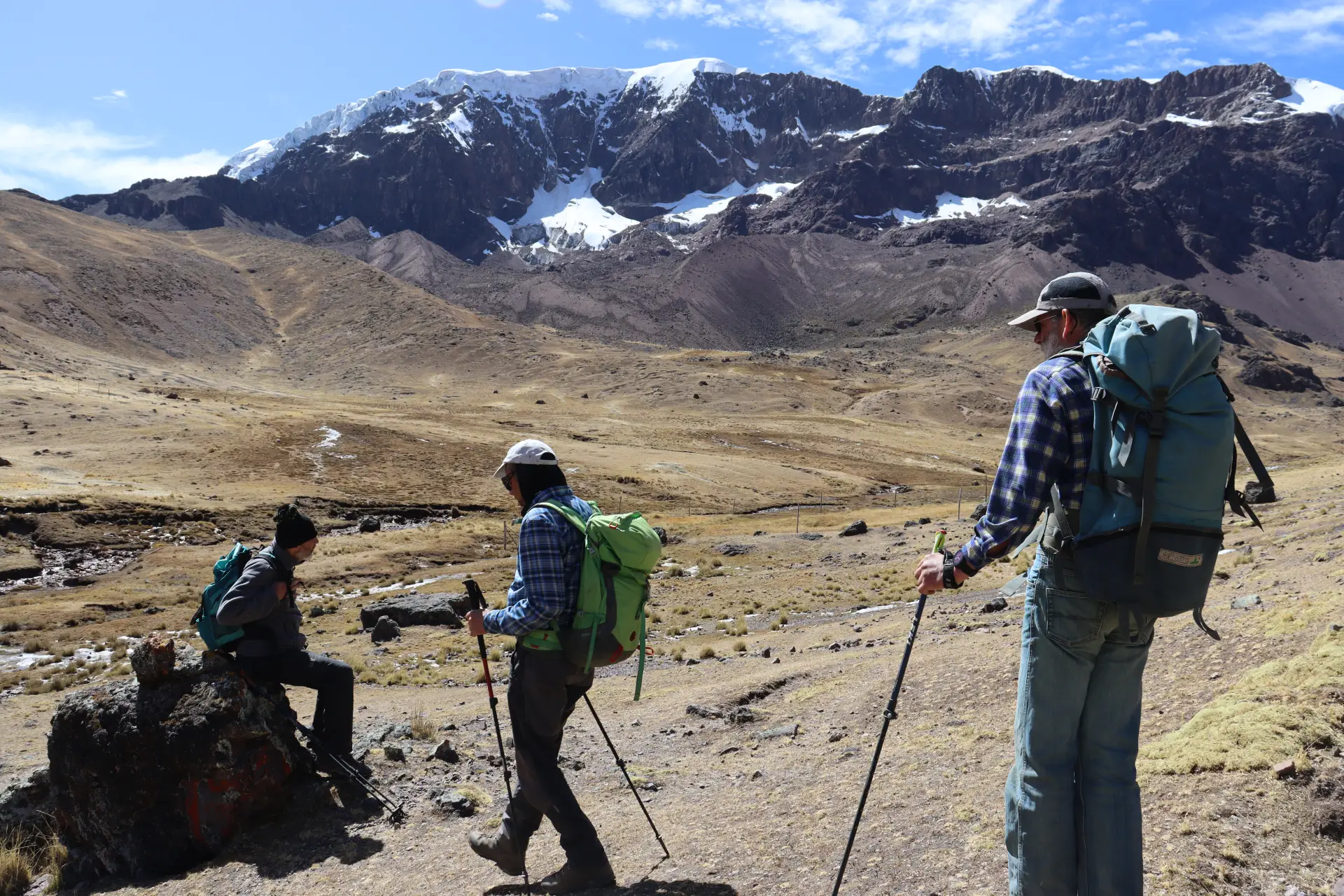
Cusco is one of the most exciting destinations in South America for mountain lovers. From the legendary Inca Trail to the remote landscapes of the Ausangate region, travelers can discover spectacular mountains, turquoise lakes, traditional Andean communities and some of Peru's most impressive high-altitude routes.
However, choosing a trekking company is an important part of planning your adventure.
A trekking tour is much more than transportation and a guide. It involves route planning, logistics, food, camping equipment, communication, risk management and coordination with local communities. These elements become especially important when exploring remote mountain environments.
Two companies may advertise a similar itinerary at very different prices. But what exactly is included? Are the guides qualified? Does the company have an emergency plan? Are the horses and local support teams treated responsibly?
Before making a reservation, take the time to ask the right questions.
This guide explains ten essential questions to ask before choosing a trekking company in Cusco, particularly if you are planning to explore Ausangate, Rainbow Mountain or other high-altitude destinations in the Peruvian Andes.
1. Is the Trekking Company Registered and Authorized?
Start by checking the company's legal and tourism credentials.
In Peru, adventure tourism services are subject to specific requirements. MINCETUR states that adventure tourism services must be provided by travel agencies registered in the National Directory of Qualified Tourism Service Providers and must have the corresponding authorization from the competent tourism authority.
This is an important distinction: a company having a website or social media account does not automatically mean it has the necessary authorization to provide every adventure tourism activity.
Before booking, ask:
-
What is the company's registered business name?
-
Is it registered as a travel agency in Peru?
-
Does it have the required authorization for the activity being offered?
-
Can it provide its business information and relevant documentation?
You can also consult official Peruvian tourism information to understand the requirements applicable to adventure tourism.
A professional operator should be willing to explain its credentials clearly. If a company avoids answering basic questions about its legal status, consider that a warning sign.
2. Who Will Be Your Mountain Guide?
Your guide is one of the most important people during a trekking expedition.
A good mountain guide does more than lead the group along a trail. They help travelers understand the route, recognize changing weather conditions, manage the pace and respond appropriately when difficulties arise.
For high-altitude routes such as Ausangate, experience in mountain environments is particularly valuable.
Ask the company:
-
How much experience does the guide have in the region?
-
Has the guide worked on the specific route you are booking?
-
What training or qualifications does the guide have?
-
Can the guide communicate effectively in your preferred language?
-
What first-aid or emergency training does the guide have?
It is also useful to ask whether the same guide will accompany the group throughout the expedition.
A responsible company should be transparent about the experience and responsibilities of its guides. Avoid assuming that someone is a qualified mountain guide simply because they have experience hiking.
3. What Safety Measures Are Included?
Safety should never be treated as an optional extra.
High-altitude trekking involves environmental challenges such as low temperatures, strong ultraviolet radiation, rapidly changing weather and reduced oxygen availability.
The CDC explains that travelers ascending to high elevations can develop altitude illness. Gradual acclimatization is important, and travelers should not continue ascending to sleep at a higher altitude when experiencing symptoms of altitude illness.
Before booking, ask:
-
Does the company provide a first-aid kit?
-
Is the guide trained to respond to common mountain emergencies?
-
Is emergency oxygen available when appropriate?
-
How does the company respond if a participant becomes ill?
-
What happens if weather conditions make the route unsafe?
-
Is there a communication plan for remote sections of the route?
Do not accept vague answers such as "We take care of everything."
Ask the company to explain its actual procedures.
For example, a responsible operator should be able to describe how the guide evaluates a participant who develops symptoms, when the group should stop ascending and how the team would organize a descent or evacuation if necessary.
Remember that carrying oxygen or a first-aid kit does not guarantee that every emergency can be resolved in the mountains. The operator must also have a realistic response plan.
4. What Is Included in the Tour Price?
One of the most common mistakes travelers make is comparing trekking companies based only on the advertised price.
A lower price does not necessarily represent better value.
Some tours include accommodation, meals, camping equipment and transportation, while others charge separately for essential services or personal equipment.
Request a detailed list of inclusions and exclusions before paying.
| Service | What to confirm |
|---|---|
| Transportation | Pickup, return transfer and transport between locations |
| Meals | Number of breakfasts, lunches and dinners |
| Guide | Professional guiding service and language |
| Camping | Tents, sleeping arrangements and dining equipment |
| Cooking | Cook, kitchen equipment and drinking water arrangements |
| Support team | Horse handlers, cooks and other local staff |
| Entrance fees | Whether community or attraction fees are included |
| Personal equipment | Sleeping bags, trekking poles and other rentals |
| Emergency support | What assistance is included and what may cost extra |
Ask for the final price per person and clarify whether there are additional charges.
For example, on an expedition in the Ausangate region, you should confirm whether sleeping bags, private tents, horse services and entrance fees are included or available at an additional cost.
A trustworthy company will explain these details before requesting payment.
5. How Many Travelers Will Be in the Group?
Group size can significantly influence your trekking experience.
Large groups may require more time for meals, rest stops, campsite organization and coordination. Smaller groups can sometimes offer more flexibility and closer communication with the guide.
However, small groups are not automatically safer or better. What matters is whether the number of participants is appropriate for the route, the support team and the company's operational capacity.
Ask:
-
What is the minimum number of participants?
-
What is the maximum group size?
-
How many guides or support staff accompany the group?
-
Will people with different fitness levels be traveling together?
-
Can the guide adjust the pace when necessary?
For remote routes, ask how the company manages participants who need additional assistance.
A responsible operator should not promise a group size that it cannot reliably support.
6. What Equipment and Camping Facilities Are Provided?
The quality and condition of equipment matter, especially when spending several nights in the mountains.
A trekking company should explain what equipment it provides and what travelers need to bring themselves.
Ask about:
Sleeping equipment
-
What type of tents are used?
-
Are tents designed for mountain conditions?
-
Are sleeping mats included?
-
Are private tents available?
Dining facilities
-
Is there a dining tent?
-
Are meals prepared by a dedicated cook?
-
Is there an organized place to eat and rest?
Personal equipment
-
Are sleeping bags available for rent?
-
Can travelers rent trekking poles?
-
Are suitable boots available, if needed?
Hygiene
-
What toilet facilities are available?
-
How is waste collected and removed?
-
What arrangements are made to maintain campsite cleanliness?
Do not assume that every operator provides the same facilities.
If you are planning an expedition in Ausangate, ask specifically about the camping equipment used at high-altitude campsites. A tent suitable for a warm-weather campsite may not provide the same comfort in a cold mountain environment.
7. Does the Itinerary Allow Time for Acclimatization?
This question is especially important for international visitors arriving in Cusco from locations near sea level.
Cusco is approximately 3,350 meters (11,000 feet) above sea level. Some trekking routes in the region reach elevations above 5,000 meters.
The body needs time to adjust to reduced oxygen availability.
According to the CDC Yellow Book, acclimatization is influenced by factors including sleeping altitude, the rate of ascent and individual susceptibility. The CDC recommends gradual ascent and advises travelers not to continue ascending to a higher sleeping altitude when experiencing symptoms of altitude illness.
Before booking, ask:
-
How many days should I spend acclimatizing before the trek?
-
What altitude will I sleep at each night?
-
Does the itinerary include gradual elevation changes?
-
Can the itinerary be adjusted if someone develops symptoms?
-
What happens if I cannot continue?
Be cautious of companies that promise that physical fitness alone will prevent altitude sickness.
Being physically fit does not eliminate the risk of altitude illness. A well-designed itinerary, appropriate acclimatization and responsible decisions during the expedition are all important.
For many travelers, spending time in Cusco or another suitable location before beginning a demanding trek can be beneficial. The appropriate plan depends on the traveler's health, previous altitude experience and itinerary.
If you have a medical condition or a history of serious altitude illness, consult a healthcare professional familiar with high-altitude travel before departure.
8. Does the Company Work Responsibly With Local Communities?
Trekking in Cusco is not only about landscapes. Many routes cross territories where Andean families maintain traditional ways of life, livestock activities and cultural practices.
A responsible trekking company should recognize the importance of these communities and the people who make mountain expeditions possible.
For example, in the Ausangate region, local residents may participate in tourism through transportation, horse services, food preparation, guiding support and other activities.
Ask:
-
Does the company work with local residents?
-
Are local horse handlers and support workers fairly compensated?
-
Does the company respect community rules?
-
Does it explain appropriate behavior when visiting local settlements?
-
Does it help travelers understand local customs?
Responsible tourism should create opportunities for local people without treating their culture as a performance.
Travelers should also ask permission before photographing people, respect private property and avoid leaving waste in community areas.
Supporting local services can help distribute tourism benefits more widely, especially in rural mountain destinations.
9. What Is the Company's Environmental Policy?
Mountain ecosystems can be vulnerable to tourism pressure.
Waste, inappropriate campsite practices, damage to vegetation and disturbance of wildlife can affect the natural environment.
A responsible trekking operator should have clear practices for reducing its environmental impact.
Ask:
-
How is rubbish collected during the trek?
-
Does the team remove waste from campsites?
-
How are human waste and sanitation managed?
-
Does the company avoid disturbing wildlife?
-
Does it follow local restrictions and designated camping arrangements?
-
How does it encourage travelers to protect the landscape?
A useful principle is to leave the mountain as you found it, or better.
Travelers can contribute by carrying reusable water bottles, avoiding disposable packaging where possible, staying on established trails and taking all personal rubbish back with them.
A company that promotes responsible trekking should demonstrate these practices through its daily operations, not just through marketing language.
10. What Happens if the Trek Is Cancelled or an Emergency Occurs?
Mountain conditions can change. Heavy rain, snow, strong winds, road problems or other unexpected circumstances may affect an expedition.
A professional company should explain its cancellation, modification and emergency policies before accepting a reservation.
Ask:
-
What happens if the weather becomes dangerous?
-
Can the route be modified?
-
What happens if the minimum group size is not reached?
-
What is the cancellation and refund policy?
-
Who should travelers contact during an emergency?
-
What services are included if a participant needs to leave the trek?
Also, understand the difference between the company's operational assistance and your personal travel insurance.
Travel insurance policies vary considerably. Some exclude high-altitude trekking, certain activities or evacuation costs unless specific conditions are met. Travelers should confirm the exact altitude limits, covered activities and emergency assistance provisions directly with their insurer.
Do not assume that a trekking company's assistance replaces comprehensive travel insurance.
A reliable operator will explain what it can provide and what remains the traveler's responsibility.
Warning Signs When Choosing a Trekking Company
While comparing operators, pay attention to the following warning signs:
-
The company cannot explain its legal registration or relevant authorization.
-
It refuses to provide a detailed itinerary.
-
It does not explain what is included in the price.
-
It makes unrealistic promises about safety or altitude sickness.
-
It cannot explain who will guide the expedition.
-
It provides no clear emergency procedures.
-
It pressures you to pay immediately without explaining the booking conditions.
-
It does not clarify how local support workers are involved.
-
It has no clear cancellation or refund policy.
One warning sign does not automatically prove that a company is unreliable. However, several unanswered questions should make you reconsider your decision.
How to Compare Two Trekking Companies
Instead of choosing the cheapest offer, compare companies using the same criteria.
| Evaluation criteria | Company A | Company B |
|---|---|---|
| Registration and authorization | Confirmed / Unconfirmed | Confirmed / Unconfirmed |
| Guide experience | Details requested | Details requested |
| Emergency plan | Details requested | Details requested |
| Group size | Confirmed | Confirmed |
| Camping equipment | Confirmed | Confirmed |
| Meals and transportation | Confirmed | Confirmed |
| Local support team | Confirmed | Confirmed |
| Environmental practices | Confirmed | Confirmed |
| Cancellation conditions | Confirmed | Confirmed |
| Final price | Confirmed | Confirmed |
This simple comparison can help you identify differences that are not obvious in promotional photographs or advertisements.
Why These Questions Matter When Booking the Ausangate Trek
The Ausangate region offers a different trekking experience from many of the more accessible routes around Cusco.
Travelers can explore high mountain passes, glacial landscapes, remote campsites, Andean lakes and communities located in the Vilcanota mountain range.
However, the route requires careful logistical preparation.
Depending on the itinerary, trekkers may spend several days at high altitude and cross demanding mountain terrain. Weather, physical condition and acclimatization can influence the experience.
When choosing an Ausangate trekking company, pay particular attention to:
-
The exact route and daily itinerary.
-
The altitude at which you will sleep.
-
The experience of the guide in the Ausangate region.
-
The condition of camping equipment.
-
The availability and responsibilities of the support team.
-
The emergency and communication plan.
-
The company's relationship with local communities.
Do not choose an expedition simply because its photographs look impressive. Choose an operator that can explain how the journey is organized and how it manages its responsibilities.
Frequently Asked Questions
1. How do I know if a trekking company in Cusco is legitimate?
Ask for its registered business name, travel agency registration and the relevant authorization for the adventure tourism activity being offered. Check the information through official Peruvian tourism channels rather than relying only on social media profiles.
2. Is it better to book a trekking tour online or in Cusco?
Both options can work. Booking online gives you time to compare itineraries, prices and company policies before arriving. Booking in Cusco allows you to speak directly with operators. In either case, request written confirmation of the services, payment conditions and cancellation policy.
3. Should I choose the cheapest trekking company?
Not necessarily. Compare the complete service, including guides, transportation, meals, camping equipment, local support and safety procedures. A lower price may mean that some services are excluded.
4. What should a trekking company provide for high-altitude routes?
The company should provide a clear itinerary, experienced guiding staff, appropriate equipment, a first-aid and emergency response plan, and information about altitude risks. The exact requirements depend on the activity and route.
5. How many days should I acclimatize in Cusco before trekking?
There is no single number that is appropriate for everyone. Acclimatization depends on your previous altitude exposure, health and the itinerary. The CDC recommends gradual ascent and provides guidance on sleeping altitude changes. Consult a healthcare professional if you have concerns about altitude illness.
6. Are small trekking groups better?
Small groups can provide a more personal experience and make communication easier. However, group size should be appropriate for the route and supported by enough staff and suitable logistics.
7. Does travel insurance cover the Ausangate Trek?
It depends on the policy. Check whether high-altitude trekking is covered, whether the route's maximum altitude is within the policy limit, and whether medical evacuation and search and rescue are included.
8. Why is responsible tourism important in Ausangate?
Responsible tourism helps protect mountain ecosystems and supports the communities and local workers who contribute to trekking activities. Respectful behavior and responsible waste management are essential in remote areas.
Final Thoughts: Choose a Company That Values Your Experience and the Mountains
Choosing a trekking company in Cusco should not be a decision based only on price or attractive photographs.
The right operator should provide transparent information, experienced personnel, suitable equipment, responsible logistics and a clear approach to safety.
For an expedition in Ausangate, these details matter because the mountains demand preparation, respect and responsible decisions.
Before making your reservation, ask questions, compare services and take time to understand what your trekking experience will involve.
At Huillca Expedition, we believe that a meaningful mountain adventure begins with good preparation, respect for Andean communities and appreciation for the natural environment.
If you are planning to explore Ausangate, Rainbow Mountain or the Seven Lakes of Ausangate, learn about the route and the services available before choosing your expedition.
Explore the Peruvian Andes responsibly and make your next mountain adventure a memorable experience.
Sources and Further Reading
-
Peru's Ministry of Foreign Trade and Tourism (MINCETUR): information on adventure tourism requirements and authorized tourism providers.
-
CDC Yellow Book 2026: High-Altitude Travel and Altitude Illness.
-
CDC Travelers' Health: Travel to High Altitudes.
Editorial note: This article provides general travel-planning information. Authorization requirements can depend on the specific activity and applicable Peruvian regulations. Travelers should verify current requirements with the competent tourism authority.