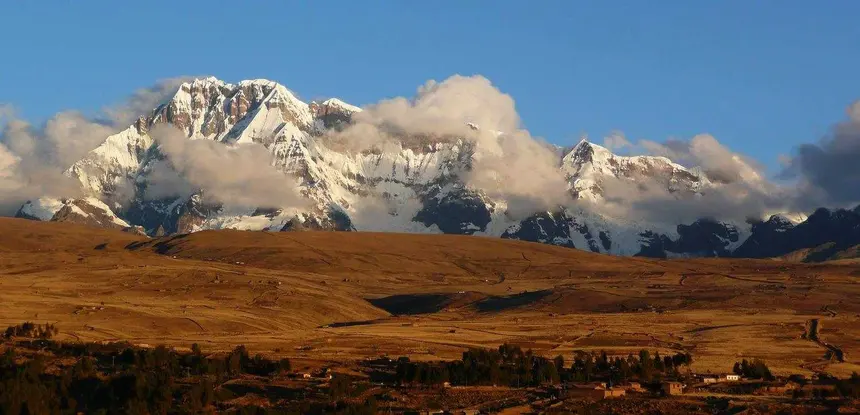







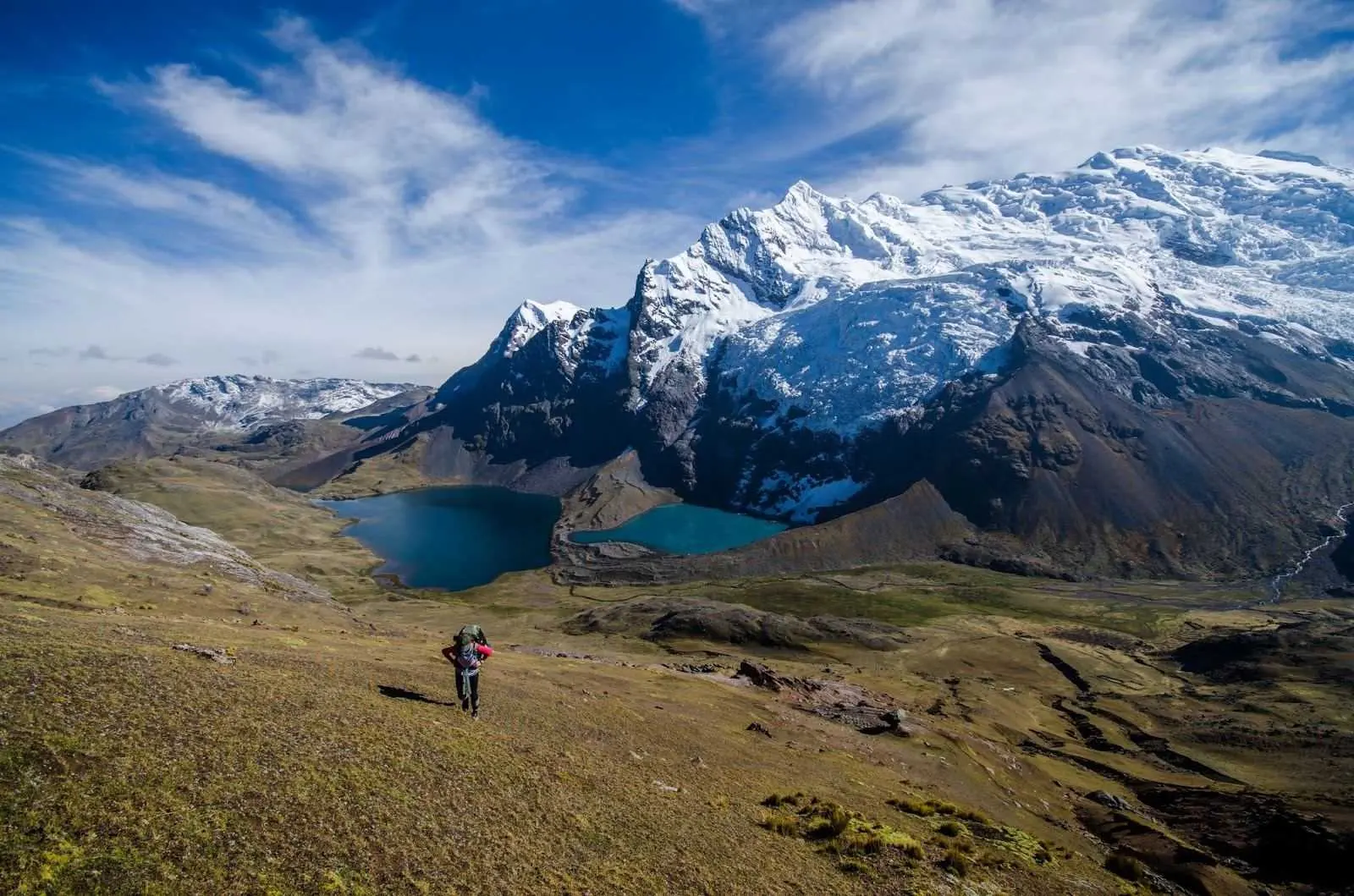
Choosing the best time to do the Ausangate Trek is one of the most important decisions when planning a hiking adventure in the Peruvian Andes. Located in the Vilcanota Mountain Range, southeast of Cusco, this spectacular high-altitude route takes you through glacial lakes, snow-covered peaks, remote valleys, colorful mineral landscapes and traditional Andean communities.
Unlike lower-altitude destinations around Cusco, the weather in Ausangate is strongly influenced by elevation. Conditions can change quickly, even during the dry season. You may start a morning under clear blue skies, experience strong winds while crossing a mountain pass, and return to camp under freezing temperatures.
For most travelers, the best period to hike Ausangate is from May to September, when rainfall is generally lower and visibility is often better. However, each month offers different conditions, and choosing the right departure date depends on your experience, expectations and tolerance for cold weather.
At Huillca Expedition, we operate in the Ausangate region and know the surroundings of Pacchanta and the local mountain routes. This guide combines practical local knowledge with official destination information to help you understand the seasons, prepare your equipment and choose the right time for your adventure.
1. When Is the Best Time to Do the Ausangate Trek?
The best time to do the Ausangate Trek is generally May through September, during the dry season in the southern Peruvian Andes.
These months usually offer:
-
Lower rainfall compared with the wet season.
-
Better chances of clear mountain views.
-
Generally drier trekking trails.
-
More favorable conditions for camping.
-
Excellent opportunities for landscape photography.
However, the dry season is also the colder part of the year. Nighttime temperatures at high-altitude campsites can fall below freezing, so proper cold-weather equipment is essential.
April and October are transition months. They can be attractive alternatives for travelers who have flexible schedules and are comfortable with a greater possibility of rain.
From November to March, rainfall becomes more frequent. Snow, rain, muddy trails and reduced visibility can make multi-day trekking more challenging.
The official tourism information published by PROMPERÚ identifies April to October as a suitable trekking period for Ausangate. For travelers seeking a more reliable balance of drier conditions and mountain visibility, May to September is generally the stronger recommendation.
Quick seasonal overview
| Period | General conditions | Recommendation |
|---|---|---|
| May–September | Drier weather, clearer skies, cold nights | Best overall period |
| April | Transition after the rainy season | Good alternative |
| October | Increasing chance of rain | Possible with flexibility |
| November–March | More rain, possible snow and muddy trails | Less favorable for multi-day trekking |
These are seasonal patterns, not guarantees. Weather conditions vary from year to year and across different sections of the mountain range.
2. Understanding the Climate in the Ausangate Region
Ausangate is located in the high Andes, where altitude has a major influence on temperature, wind and precipitation.
The region does not experience the same conditions as Cusco city. While travelers may enjoy relatively mild weather in Cusco, temperatures at a campsite above 4,500 meters can be dramatically colder.
The main environmental factors affecting the trek are:
Altitude: Higher elevations generally have lower temperatures and more demanding weather conditions.
Solar radiation: The sun can feel intense during clear days, even when the surrounding air is cold.
Wind: Exposed mountain passes can feel much colder because of wind chill.
Precipitation: Rain, hail and snow can occur depending on the season and local weather systems.
Nighttime cooling: Temperatures can drop rapidly after sunset, particularly in exposed camping areas.
MINCETUR's destination information describes Ausangate as a cold, dry high-mountain environment, with approximate temperatures that can range from around -10°C at night to 0–10°C during the day. These are general reference values, not a forecast for every campsite.
The most important rule is to prepare for changing conditions throughout the year.
3. Ausangate Trek Weather by Month
Understanding the weather month by month helps you choose a departure date according to your priorities.
The following guide describes general seasonal expectations. It should not be interpreted as a precise historical temperature table or a daily weather forecast.
January: Rainy conditions and limited visibility
January is part of the rainy season in the Cusco Andes.
Rain showers are frequent, and cloudy conditions may reduce visibility around the mountain peaks. At higher elevations, precipitation can occur as snow or hail.
Trail conditions may become muddy and slippery, particularly around exposed sections and mountain passes.
What to expect:
-
Frequent rainfall.
-
Cloudy skies and changing visibility.
-
Wet trekking trails.
-
Possible snow at higher elevations.
Local recommendation: January is not one of our preferred periods for planning a long high-altitude trek. Always evaluate the actual trail conditions and weather forecast before making a decision.
February: One of the wettest months
February is commonly one of the wettest months in the Cusco region.
Rainfall can affect access roads, camping conditions and walking trails. Persistent precipitation can also make it more difficult to enjoy the mountain views.
For a multi-day expedition, these conditions require careful assessment.
What to expect:
-
Frequent and sometimes persistent rainfall.
-
Muddy and slippery paths.
-
Possible snow and hail at higher elevations.
-
Reduced mountain visibility.
Local recommendation: February is generally a poor choice for travelers looking for stable conditions. Do not assume that a scheduled departure means every route will be safe to walk.
March: Gradual transition toward drier conditions
March remains part of the rainy season, although conditions can begin to change as the month progresses.
Some days may offer good visibility, while others bring rain and cloud cover.
The landscape is often greener than during the dry season, but trail conditions can remain wet.
What to expect:
-
Continued rainfall.
-
Variable visibility.
-
Green high-Andean landscapes.
-
Possible muddy trail sections.
Local recommendation: If you are considering March, maintain flexibility and confirm the route conditions close to your departure date.
April: A transition month worth considering
April marks a transition toward the drier period.
Rainfall generally begins to decrease, although showers can still occur. Vegetation remains relatively green after the rainy months, making this an interesting period for landscape photography.
What to expect:
-
A gradual decrease in rainfall.
-
Variable cloud cover.
-
Green valleys and pastures.
-
Changing trail conditions.
Local recommendation: April can be a good alternative for travelers who prefer quieter trails and are prepared for occasional rain.
May: Beginning of the preferred trekking season
May is one of the most attractive months for the Ausangate Trek.
The rainy season has generally ended, and the landscape begins to experience drier conditions. Mountain views can become clearer, and trekking trails are often more suitable for multi-day walking.
What to expect:
-
Generally lower rainfall.
-
Better opportunities for clear skies.
-
Good conditions for landscape photography.
-
Cold nights at high-altitude campsites.
Local recommendation: May is an excellent option if you want to enjoy the mountain scenery while traveling near the beginning of the main dry season.
June: Excellent conditions for mountain views
June is one of the most popular months for trekking in the Peruvian Andes.
The weather is generally dry, and clear skies offer excellent opportunities to appreciate the snow-covered peaks, glacial lakes and mountain valleys.
However, temperatures can fall considerably at night.
What to expect:
-
Generally dry conditions.
-
Excellent visibility on many days.
-
Strong solar radiation.
-
Cold mornings and nights.
Local recommendation: June is an excellent month for travelers who prioritize mountain views and photography. Bring suitable sleeping equipment and thermal clothing.
July: Dry weather and very cold nights
July is part of the core dry season.
Clear skies are common, but the cold can be intense during early mornings and nighttime camping.
Wind exposure can make the temperature feel significantly lower, particularly when crossing high mountain passes.
What to expect:
-
Low rainfall in general.
-
Clear mountain landscapes.
-
Cold nighttime conditions.
-
Strong sunlight during the day.
Local recommendation: July is suitable for well-prepared trekkers. A high-quality sleeping bag and a good layering system are essential.
August: A strong month for trekking
August continues the dry season and is another popular period for exploring Ausangate.
The probability of rain is generally lower than during the wet season, although wind can affect exposed areas.
The landscape may appear drier in some valleys and pastures.
What to expect:
-
Generally dry weather.
-
Good opportunities for mountain photography.
-
Cold nights and mornings.
-
Possible strong winds in exposed areas.
Local recommendation: August is a very good option for multi-day trekking, provided you are prepared for low temperatures.
September: A good balance between weather and travel
September is generally a favorable month for trekking.
Dry-season conditions may continue, although the possibility of rainfall can gradually increase toward the end of the month.
It can be a good option for travelers who want to enjoy the mountain scenery before the transition toward the rainy season.
What to expect:
-
Generally favorable trekking conditions.
-
Good visibility on many days.
-
Cold nights.
-
Increasing possibility of occasional showers.
Local recommendation: September is one of the best months to consider if you want to combine good mountain conditions with a departure outside the peak winter period.
October: Changing conditions and occasional rain
October is a transition month.
The weather can remain favorable during some periods, but rainfall may become more frequent.
Travelers should prepare for both sunny days and sudden showers.
What to expect:
-
Variable weather.
-
Increasing rainfall probability.
-
Changing trail conditions.
-
Possible cloudy afternoons.
Local recommendation: October can work for flexible travelers. Confirm weather conditions and local access before departure.
November: Beginning of the rainy season
November marks the transition toward the wetter months.
Rainfall becomes more frequent, and afternoon showers may affect visibility and trail conditions.
What to expect:
-
Increasing precipitation.
-
More frequent clouds.
-
Possible wet trails.
-
Variable mountain visibility.
Local recommendation: Plan carefully and confirm whether the selected route is suitable for the current conditions.
December: Wet-season conditions
December is part of the rainy season.
Rainfall, cloud cover and possible snow at higher elevations can make trekking more demanding.
What to expect:
-
Frequent rain.
-
Cloudy periods.
-
Wet and slippery trails.
-
Possible snow at high elevations.
Local recommendation: December is generally less favorable for multi-day trekking. Consider a different departure period if your priority is stable weather.
4. What Are the Daytime and Nighttime Temperatures in Ausangate?
Temperature is one of the most important factors to consider before booking an Ausangate expedition.
Unlike a day trip around Cusco, a multi-day trek involves sleeping at high altitude, where temperatures can fall below freezing.
During sunny periods, walking can feel comfortable because your body generates heat through physical activity. However, the situation changes when you stop, reach an exposed mountain pass or arrive at camp.
Daytime conditions
During clear weather, the sun can make the environment feel warmer than the air temperature suggests.
Nevertheless, strong winds and cloud cover can quickly change how cold you feel.
A practical clothing system should allow you to add or remove layers while walking.
Nighttime conditions
Nighttime temperatures can fall below 0°C at high-altitude campsites, particularly during the dry season.
For this reason, your sleeping system should include:
-
A sleeping bag suitable for subzero conditions.
-
An insulated sleeping mat.
-
Dry thermal clothing.
-
Warm socks.
-
A hat or beanie.
-
Protection against wind and moisture.
The exact sleeping bag temperature rating should be selected according to the expected campsite conditions and the manufacturer's comfort rating, not simply its extreme rating.
Why can the dry season be colder?
The dry season often brings clearer skies and fewer clouds. This is beneficial for visibility, but it also means greater nighttime heat loss from the ground and surrounding surfaces.
That is why the months with the best mountain views can also be among the coldest periods for camping.
5. Dry Season vs. Rainy Season: Which Is Better?
Both seasons offer different experiences, but they are not equally suitable for every type of traveler.
| Factor | Dry season | Rainy season |
|---|---|---|
| Mountain visibility | Generally better | More variable |
| Rainfall | Lower | Higher |
| Trail conditions | Usually drier | Often muddy or slippery |
| Nighttime temperatures | Can be very cold | Variable, still cold at altitude |
| Landscape | Drier pastures | Greener vegetation |
| Camping | Generally more predictable | More challenging |
| Photography | Good opportunities for clear views | Dramatic clouds and green landscapes |
For most first-time visitors, the dry season is the better choice.
The rainy season may appeal to experienced travelers who accept uncertainty, but the decision should always depend on current mountain conditions and the operator's safety assessment.
6. Best Time to Visit Ausangate According to Your Travel Style
The best month is not necessarily the same for every visitor.
Your ideal departure depends on what you want to experience.
For landscape photographers
Consider May through August.
These months generally offer better opportunities for clear mountain views and dramatic scenery.
Early mornings are often particularly rewarding because the light can highlight the contours of the snow-covered peaks.
For first-time high-altitude trekkers
Consider May, June or September, subject to proper acclimatization and physical preparation.
The lower probability of rain during these months can make the experience more predictable than during the wet season.
However, good weather does not eliminate altitude-related risks.
For travelers who prefer quieter periods
Consider April or October, depending on current conditions.
These transition months can offer a different atmosphere, but weather is less predictable.
For travelers interested in the green Andean landscape
The months following the rainy season can offer greener pastures and different photographic conditions.
April may be an interesting option, although rainfall can continue.
7. How Weather Affects the Difficulty of the Ausangate Trek
The Ausangate Trek is challenging mainly because of altitude, terrain and the length of the walking days.
Weather can make this challenge more demanding.
During the dry season, trails are generally more suitable for walking, but cold temperatures and wind can still affect your performance.
During the rainy season, wet rocks, muddy paths, hail and reduced visibility can increase the difficulty of certain sections.
The route includes high mountain passes and long days of walking. Some sections exceed 5,000 meters above sea level, depending on the itinerary.
This means that even physically fit travelers need to prepare carefully.
Before starting the trek, consider:
-
Your physical condition.
-
Your previous experience at high altitude.
-
The number of days available for acclimatization.
-
The weather forecast.
-
The expected campsite temperatures.
-
The equipment provided by your operator.
Read our detailed guide: How Difficult Is the Ausangate Trek?.
8. What Should You Pack for Ausangate in Each Season?
Packing correctly is essential for comfort and safety.
A good clothing system uses three layers.
Base layer: moisture management
The base layer should help move sweat away from your skin.
Recommended items:
-
Thermal long-sleeved shirt.
-
Thermal underwear.
-
Moisture-wicking socks.
Avoid relying on cotton as your main trekking layer because it retains moisture and dries slowly.
Insulating layer: warmth
The middle layer retains body heat.
Recommended items:
-
Fleece jacket.
-
Insulated jacket.
-
Warm trekking trousers.
-
Additional thermal clothing for camp.
Outer layer: protection
The outer layer protects against wind, rain and snow.
Recommended items:
-
Waterproof jacket.
-
Waterproof trousers.
-
Wind-resistant clothing.
-
Rain protection for your backpack.
Essential accessories
-
Warm gloves.
-
Beanie or thermal hat.
-
Sunglasses.
-
High-SPF sunscreen.
-
Trekking boots with good grip.
-
Trekking poles.
-
Headlamp.
-
Dry bags.
-
Reusable water bottle.
For a detailed equipment list, read our guide: What to Wear for the Ausangate Trek.
9. How to Prepare for the Cold Nights in Ausangate
Cold nights are one of the most underestimated aspects of this expedition.
Even when the day is sunny, temperatures can fall rapidly after sunset.
These practical steps can make a significant difference:
Change into dry clothing before sleeping. Do not sleep in wet trekking clothes.
Protect your sleeping bag from moisture. Store it inside a waterproof bag during transportation.
Use an insulated sleeping mat. The ground can draw heat away from your body.
Keep your head and feet warm. A dry hat and clean thermal socks can improve sleeping comfort.
Prepare your clothing before sunset. Avoid waiting until you are already cold to organize your equipment.
Follow your guide's instructions. Your guide can help you understand the conditions at each campsite.
10. Altitude, Weather and Acclimatization: What Travelers Need to Know
Weather is not the only challenge in Ausangate. Altitude is equally important.
The route passes through high-altitude environments where the amount of available oxygen is lower than at sea level.
Even experienced hikers may experience symptoms of altitude sickness.
Common symptoms include:
-
Headache.
-
Nausea.
-
Dizziness.
-
Loss of appetite.
-
Unusual fatigue.
-
Difficulty sleeping.
Before beginning the trek, spend time acclimatizing in Cusco or another suitable high-altitude location.
Many travelers plan at least two or three days of gradual acclimatization, although the appropriate schedule depends on the individual and the itinerary.
Avoid intense physical activity immediately after arriving in Cusco.
If symptoms become severe or worsen, do not continue ascending. Inform your guide and seek medical assessment. Severe altitude illness requires prompt descent and medical attention.
Do not rely on coca tea, hydration or physical fitness as guaranteed protection against altitude sickness.
For additional information, read our guide: Physical and Mental Preparation for the Ausangate Trek.
11. How the Weather Affects the Seven Lakes of Ausangate
The Seven Lakes of Ausangate are another excellent way to experience the landscapes around the mountain.
The circuit begins in the Pacchanta area and offers views of several high-altitude lakes surrounded by mountains and Andean landscapes.
The dry season is generally favorable because the trails are often drier and visibility can be better.
During the rainy season, the surroundings may become greener, but walking conditions can be more difficult.
If you have only one day available, this circuit may be a suitable alternative to a multi-day expedition.
Explore our Seven Lakes of Ausangate tour and discover the landscapes around Pacchanta.
12. Local Advice: Choosing Your Departure Date with Huillca Expedition
Planning an Ausangate expedition requires more than checking a calendar.
At Huillca Expedition, we work in the surroundings of Pacchanta and the Ausangate region. This local connection helps us understand the importance of evaluating conditions before each departure.
Our recommendations are:
Choose your season carefully. May to September is generally the preferred period for multi-day trekking.
Check the conditions before traveling. Seasonal averages cannot predict the weather on your exact departure date.
Prepare for cold nights. A good sleeping system is essential, even during sunny months.
Allow enough time for acclimatization. Do not underestimate the altitude.
Follow the local team's recommendations. Route access, weather and campsite conditions may change.
Prioritize safety over the itinerary. A responsible operator should be prepared to adjust plans when conditions require it.
We do not recommend treating a fixed departure date as a guarantee of favorable mountain weather.
13. Frequently Asked Questions About Ausangate Trek Weather
What is the best month to do the Ausangate Trek?
June, July and August are among the most favorable months for clear mountain views because they fall within the dry season. May and September are also excellent options.
Is May a good time to hike Ausangate?
Yes. May generally marks the beginning of the preferred trekking season, with lower rainfall and improving visibility.
Is June too cold for the Ausangate Trek?
June can be very cold at night, especially at high-altitude campsites. With appropriate thermal clothing and a suitable sleeping bag, it can be an excellent trekking month.
Is July or August better for Ausangate?
Both months usually offer good dry-season conditions. The difference for individual travelers often depends on their departure date, tolerance for cold and the actual weather forecast.
Can I hike Ausangate in October?
Yes, depending on the weather and route conditions. October is a transition month, so occasional rain is more likely than during the core dry season.
Is the Ausangate Trek possible during the rainy season?
It may be possible under suitable conditions, but rain, snow, mud and reduced visibility can make the expedition more challenging. A local assessment is essential before departure.
Does it snow on Ausangate?
Yes. Snow can occur at high elevations, and conditions can change throughout the year.
How cold does it get at night?
Nighttime temperatures at high-altitude campsites can fall below freezing. MINCETUR provides approximate reference temperatures down to around -10°C for the mountain environment, but actual conditions vary by location and date.
Do I need a special sleeping bag?
Yes. Choose a sleeping bag suitable for subzero temperatures and check its comfort rating. Your operator should confirm the expected conditions at the campsites.
How many days should I spend in Cusco before the trek?
Many travelers plan at least two or three days for gradual acclimatization. Your ideal schedule depends on your previous altitude exposure and individual response.
Is the dry season always sunny?
No. Although clear skies are more common, mountain weather can change quickly. Rain, hail, wind and snow are possible at any time of the year.
What is the best time to visit the Seven Lakes of Ausangate?
May to September is generally favorable for walking and enjoying mountain views. Actual conditions should still be checked before departure.
Conclusion: Plan Your Ausangate Trek at the Right Time
The best time to do the Ausangate Trek is generally from May to September, when the southern Peruvian Andes experience their drier season.
These months offer better opportunities for clear mountain views, drier trails and more predictable trekking conditions. However, they also bring very cold nights, particularly at high-altitude campsites.
April and October can be attractive alternatives for flexible travelers, while November through March generally brings more challenging weather conditions.
Choosing the right season is only the beginning. Proper acclimatization, suitable equipment, physical preparation and local guidance are essential for a successful mountain adventure.
At Huillca Expedition, we know the Ausangate region and the surroundings of Pacchanta. Our goal is to help travelers experience these mountains with responsible planning, local knowledge and respect for the Andean environment.
Ready to explore the Ausangate mountains?
Discover our trekking experiences and plan your adventure with a local team.