
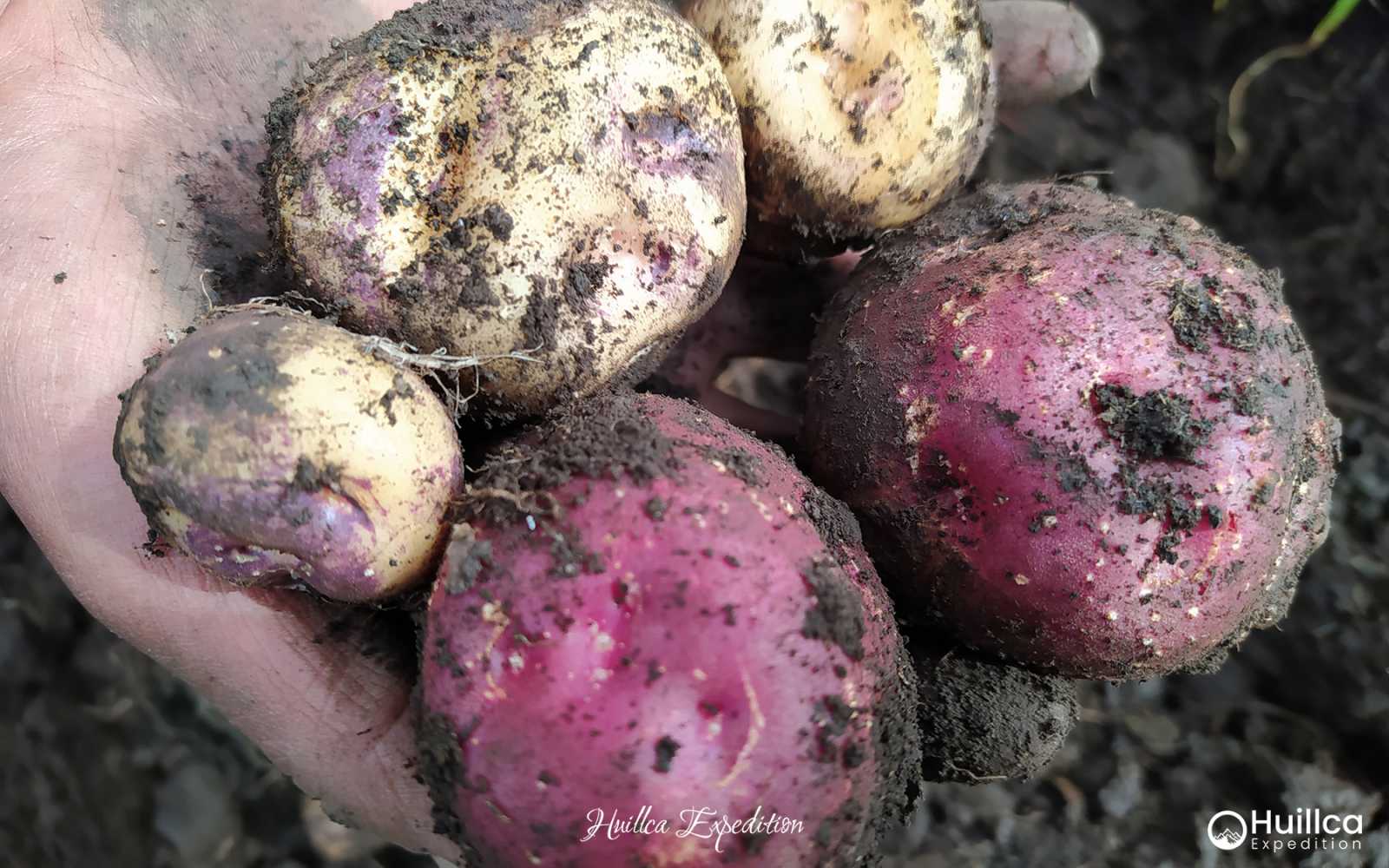
Ausangate, one of the most iconic regions of the Peruvian Andes, stands out as a significant producer of native potatoes. This tuber not only sustains local communities but also plays a vital role in the cultural and culinary identity of Peru. In this article, we’ll explore the cultivation, production, harvesting, storage, and consumption of these delicious and diverse native potatoes.
Farmers in Ausangate dedicate between 0.5 and 2 hectares annually to cultivating native potatoes, which include an astonishing variety of species. These high-altitude lands offer an ideal environment for native potato production due to their cold climate and traditional farming techniques.
Native potatoes are highly versatile in their use, lending themselves to soups, stews, frying, roasting, and even innovative recipes that blend traditional and modern cooking styles.
The production cycle begins in May when farmers carefully select the best potatoes to use as seeds for the next planting season. These seeds are stored meticulously until September or October, when the planting begins.
Farmers use the chaquitaclla, an ancestral tool designed to till and aerate the soil. Families transport the seeds and natural organic fertilizer to their fields using horses, though llamas and alpacas were traditionally used for this purpose in the past.
Approximately five months after planting, the plants begin to bloom, creating a unique visual spectacle. Native potato flowers display a vibrant array of colors—white, yellow, pink, red, and more—depending on the variety. These blooms, accompanied by lush green leaves, beautify the fields of Ausangate and serve as an indicator of healthy crops.
Harvesting occurs in March and April, once the plants have completed their growth cycle. Families work together to collect the potatoes, using manual tools like the chaquitaclla or small plows. Careful handling ensures that the highly valued tubers are not damaged.
During harvest, potatoes are sorted by size and variety. Those intended for consumption are separated from those reserved as seeds for the next planting season.
After the harvest, potatoes are stored in taques, traditional structures made of layers of straw and earth that maintain a stable temperature and protect the tubers from moisture and frost. This ancestral method preserves the potatoes for several months, ensuring a steady supply for consumption and future planting.
In addition to being functional, taques are a sustainable practice that utilizes local and renewable materials. Many farmers now complement this system with modern methods to enhance potato preservation.
Native potatoes are not just a staple food for Andean communities; they symbolize resilience and genetic diversity. In Ausangate, native potatoes are the product of farming techniques passed down through generations, combined with a deep respect for the land and its natural cycles.
In gastronomy, native potatoes have gained national and international recognition for their unique flavors, textures, and colors, making them a standout ingredient in Peruvian haute cuisine.
The cultivation, harvesting, and storage of native potatoes in Ausangate reflect a profound connection between Andean communities, their land, and their cultural heritage. This process not only nourishes local families but also preserves a tradition that is a source of pride for Peru and the world.
 Consult an expert
 Chat
Chat