
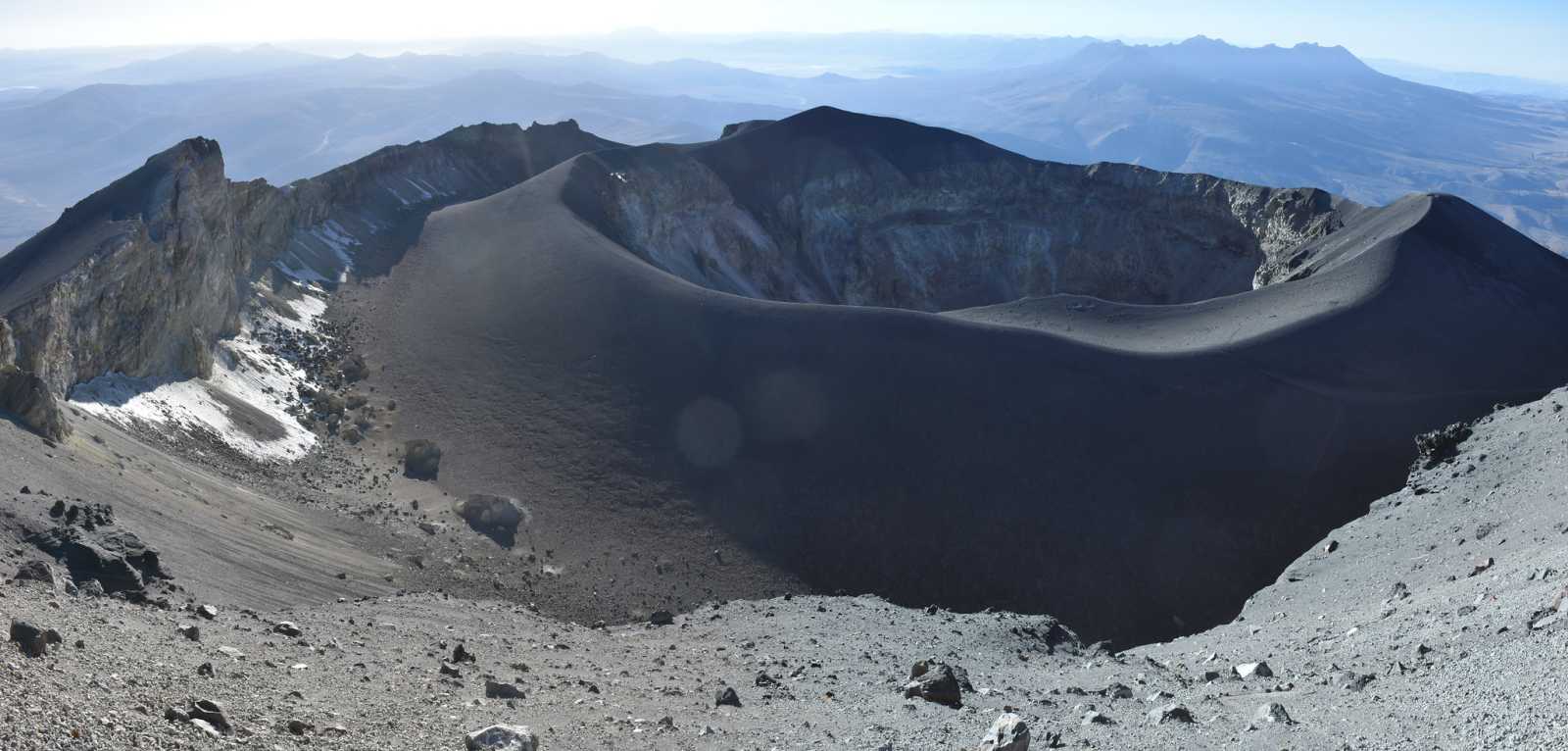
The Misti Volcano, located at 5,822 meters above sea level in the Arequipa region, is one of the favorite destinations for mountaineers and adventurers in Peru.
Its imposing silhouette dominates the Arequipa landscape and represents an accessible challenge for those looking to venture into high-altitude climbing.
In this blog, we’ll tell you everything you need to know about the routes to climb Misti Volcano, their difficulty levels, estimated times, recommendations, and which one to choose based on your experience.
Currently, there are two main routes commonly used by local guides and agencies:
This is the most popular and frequently used route to climb Misti. It starts from the Salinas and Aguada Blanca National Reserve, northeast of Arequipa. It’s ideal for those seeking a gradual ascent with good views and less technical demand.
On this route, climbers typically camp at Nido de Águilas base camp, located at around 4,600 meters. From there, the final push to the summit is made early in the morning.
Advantages:
Disadvantages:
This route begins in the district of Chiguata, east of Arequipa, and is steeper and more demanding than the northern route. It's recommended for hikers with good physical condition and prior high-altitude trekking experience.
Advantages:
Disadvantages:
The ideal season for climbing Misti is from April to November, during the dry season in the southern Andes of Peru. During these months, the weather is more stable and the chances of rain or snow are lower.
Avoid climbing between January and March, as this is the rainy season, with fog, hail, and slippery terrain that increases risk.
Most Misti expeditions last 2 days and 1 night:
Some experienced climbers complete the route in a single day, but this requires excellent acclimatization and physical condition.
Although Misti doesn’t require technical equipment like crampons or ropes (except in snowy conditions), it's essential to bring:
Local agencies often include camping equipment (tents, mats, sleeping bags) in their packages.
Climbing Misti is not technically difficult, but the high altitude and steep final section make it physically demanding. It's recommended to:
Technically yes, but it is not recommended. Misti is a high-altitude mountain and can be dangerous without an experienced guide. Trails are not always marked, and weather conditions can change quickly.
Climbing with a licensed agency or official guide ensures:
 Consult an expert
 Chat
Chat